A Trust Only Works If Your Assets Are Actually In It
Creating a trust document is step one. The step that actually creates probate avoidance is transferring your assets into the trust — re-titling real property with a new deed and updating beneficiary designations on financial accounts. A trust that has never had assets moved into it provides no probate protection for those assets, even if the document itself is perfectly drafted.
We serve living trust clients throughout California, not just on the Central Coast. California probate law, the Probate Code fee structure, and Prop 19 property tax implications are statewide issues. Whether you are in the Bay Area, Southern California, the Central Valley, or beyond, we can build a complete living trust package by phone and video. If you have California real property and need a properly funded trust with a recorded deed transfer, call us at (888) 461-2215 to discuss your situation.
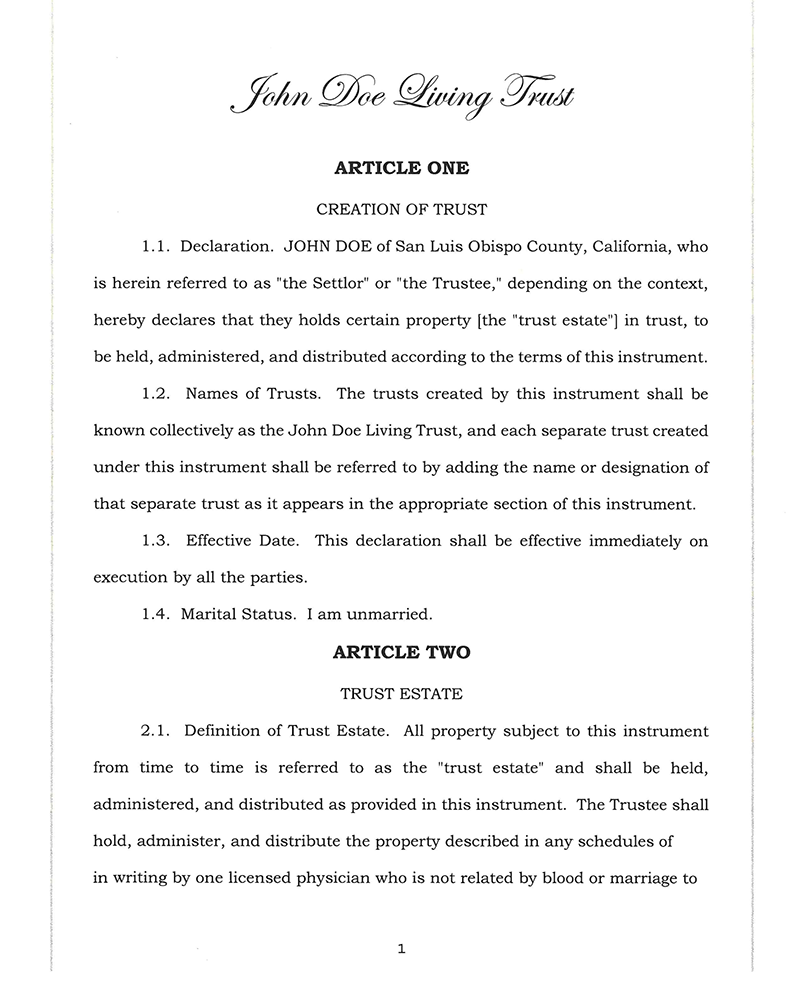
This gap is something we see often when clients bring in documents from a prior attorney or an online service. The trust exists on paper, but the house was never re-deeded into it, the brokerage accounts still list the owner individually, and the bank accounts have no beneficiary. When the owner passes, those assets still go through probate. By then, it is too late to fix.
We include deed preparation, recording, and a complete asset funding review as part of every trust plan we deliver. We don't hand you a set of documents and send you off to figure out the rest. The trust is not done until it is funded.
Revocable Living Trust: What It Does and Doesn't Do
A revocable living trust accomplishes several things your will cannot:
What a revocable living trust does not do: it does not reduce or eliminate estate taxes on its own, it does not protect assets from your own creditors while you are alive, and it does not eliminate the need for a will entirely. You still need a pour-over will to capture any assets not in the trust at your death.
Trust Review Catches Missing Deed Transfers Before It Was Too Late
The Situation
A Morro Bay couple had a living trust created five years earlier by a now-retired attorney. They contacted us after their neighbor spent 14 months in probate on a similar estate. When we reviewed their documents, the trust itself was properly drafted, but neither their home nor their two beach rental properties had ever been deeded into the trust. All three properties remained in their individual names.
Our Approach
We completed a full trust asset review covering the home, two rental properties, brokerage accounts, and bank accounts. We prepared three trust transfer deeds, coordinated with their title company on the rental properties (which had loans requiring lender notification), updated beneficiary designations on all financial accounts, and revised the trust to reflect their current distribution wishes.
The Outcome
All three deeds recorded within 15 business days. All financial accounts are now properly titled or designated. Their estate will pass entirely outside probate at either spouse's death, without court involvement, public record, or the 12 to 18 month delay their neighbor's family experienced.
Client name changed. Results vary based on individual circumstances. Prior results do not guarantee similar outcomes.
Wills: When They're Enough and When They're Not
A will is appropriate as a standalone document if you are young, have limited assets, don't own real property, and are naming a guardian for minor children. In those situations, a will efficiently documents your intentions without the cost of a full trust package. However, for any SLO County resident who owns real estate, a will alone means probate. It doesn't matter how clearly the will is written. It goes through court.
We are candid with clients about what they actually need. Some people genuinely need only a will and beneficiary designation updates. Most property owners in this county need a full trust package. We tell you which applies to your situation in the free consultation and explain why. We don't upsell estate planning services beyond what your situation requires.
Special Circumstances We Address Regularly
Blended families with children from prior relationships require particular care in trust structure. Standard provisions can unintentionally disinherit children from a prior relationship when the surviving spouse controls the trust and later changes it. We structure these trusts with separate property tracking and conditional provisions that protect all intended beneficiaries.
Clients with a beneficiary who has a disability, substance dependency, or financial instability often benefit from discretionary or spendthrift provisions in their trusts, or from a separate special needs trust that preserves government benefit eligibility. We assess this in every estate plan that involves a beneficiary with special circumstances.
See also our full trusts and estate planning page and our probate page for what happens when a trust is not in place. Clients in Atascadero and Paso Robles are within our normal service area. The California State Bar probate FAQ and the California Probate Code are the governing authorities.